Articles
Auld Lang Syne
January 2012
The
Norwood Park Fire Protection District would like to take this month as
one of sober reflection and memory for one of our dear departed. In
November of last year the fire service lost our closest link to times
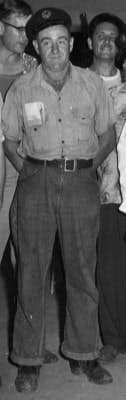
gone by. Thomas M. Green, aged 91, was a volunteer firefighter with our
Fire Protection District from the late 1940's until our department went
from volunteer to career service. He served his community faithfully as
a firefighter, an employee for the school district and several other
jobs, remaining in his first home on Eastwood street (when it was built,
the only other visible house to the northwest was on Higgins street)
until it was destroyed by an accidental fire in 2003.
Tom joined the Norwood Park fire service while it was in it’s infancy,
working as a firefighter and an Engineer for the district. As a
volunteer he was one of the builders of our second firehouse on Montrose
Street as well as the rehab of Station #1.
Tom Green did not end his service to the District as a volunteer. He
became a commissioner and served as one for over 25 years, shaping the
District into the proud service it is today!
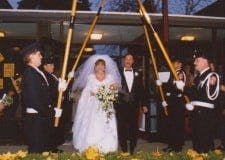
A veteran of World War II, Tom served in Europe with the Blue Devils. He
connected proudly with the Army and his country, and was buried at his
request in his uniform with a full military service. The firefighters
and officers were proud to perform honor guard details for Tom, and his
knowledge, humor, and passion will be missed as surely as it will never
be forgotten.
The Norwood Park Fire Department would like to Thank You, Tom, for
making us what we are!
Don’t Give Fire a Ghost of a Chance!
By Firefighter Stan J. Koy
Norwood Park Fire Protection District
October 2011
Halloween has been a night of fun and mischief for centuries.
Originally called “All Hallows Eve” in fifth century Ireland, the
festival which today is fun and games for children was rooted in legend
and fear. Celtic belief was that persons who had died the previous year
would come out on October 31st, and choose a body they needed to possess
for one year before moving on into the afterlife. Since villagers didn’t
want to be possessed, they did everything they could to make themselves
and their households unappealing to the dead.
On the night of the 31st, the villagers would put out all the fires in
their household, making it cold and dark. Then, to frighten the roving
ghosts and spirits, they would dress up and devils and witches and have
an outdoor gathering to be as noisy as possible. Halloween, as
introduced to America by immigrants, thus became known for dressing up
and causing trouble, and was known as “mischief night” during the mid
1800s.
So what does this have to do with fire safety, in a month where Fire
Prevention is prominent and there is so much ground to cover in safety?
Let’s look at what we can do in today’s world, by taking lessons from
the rich traditions of the past, to make our home and children safer.
Take a close look at your home. If you haven’t had your furnace
inspected by now, you might be inviting an unwelcome fire. Make a call
and get it checked. Just as the villagers used to put out the fires in
their household on the night of the 31st, you too should turn out lights
and extinguish your candles and jack-o-lanterns before going out…even if
you’ll only be gone a minute!
If your children are going out, check their costumes for safety. Are the
materials fire proof or fire resistant? Any store bought costume should
have a label telling you which it is. The children will be playing
around pumpkins and fire tonight, make sure there is no loose material
on them which could catch fire. If they’re wearing a hood or mask, make
sure they can see through it.
Remember to give them a flashlight with fresh batteries, so cars and
other people can see them walking. Always make sure they have adult
supervision when trick or treating, and do an inventory of their haul at
the end of the evening. This gives you a chance to inspect the goods for
tampering before your children eat them.
If you’re having people over to your house, it’s a good idea to make
sure you’re ready for guests. Make sure your smoke detectors work, and
have adults nearby the children while they play Halloween games, to
minimize injuries.
Halloween is a fun, special time for children. Keep them safe from fire
and injury…and keep them in the spirit of the holiday!
Out and About This Summer!
June 2011
Summer arrived hard this past month, with temperatures climbing
thirty degrees overnight in some cases, and after a long winter, people
have started finding themselves climbing the walls to get out and start
enjoying summertime. For most, this means camps, sports,
vacations...anything that takes the family into sunlight and away from
electronics...and most people will get there by automobile.
Automobile vacations are already up for the year, and even more so
automobile staycations (there’s a term that will be in dictionaries
soon!). Of course we’ve been inundated with a variety of safety talks
and commercials to limit accidents. Everything from ‘Click It or Ticket’
to free child safety seat checks are touted regularly in most media
forms. Despite this, nationwide there have already been 66 fatalities of
children based on automobile accidents THAT WEREN’T COLLISIONS. So what
types of accidents could these be? Playing with seat belts, windows, and
other vehicle devices account for many of them. Another type of incident
is becoming more prevalent, leaving children unattended in the car.
It doesn’t take much, in all honesty, for a perfect day out to become a
tragedy. In a car with windows closed, the interior temperature can
climb a degree a minute and more for the first half hour, meaning that
it’s entirely possible an infant could die of hyperthermia on a
comfortable 75 degree day in less than 20 minutes. Children in the past
have died on substantially cooler days as the car becomes stifling also,
since the body over time loses it’s ability to compensate for the heat
building up. Although it’s believed that cracking the windows would make
a significant impact, studies have shown this to not be true, as the
heat cannot be released as quickly as it builds in the vehicle. An
illustration of this type was seen on a large scale in the 1990's in
Chicago, when the heat build up overcame people in their homes and
apartments without air conditioning...at that time, fans did little more
than push heated air around. Who were the victims? Elderly, children,
and the sick.
But we will be driving around this summer...and it will be hot! There
will be children in our cars and some of us won’t have air conditioning.
So what can be done? Here are some tips to help you make the most of a
safe season:
When traveling with kids, whether on business or pleasure, keep your
“needs” in the backseat on the floor (be that a cell phone, laptop, or
diaper bag). Then you’ll have to go back there every time you stop to
get them , reducing the danger of a child being left behind or even
temporarily forgotten. Children and infants are small and hard to see,
infant seats also face backwards and so you can’t readily see a child in
the rearview mirror. Keep them on the passenger side or in the middle of
the back seat whenever practical, to improve their visibility to you.
Keep kids in the fluids, and out of the car! Follow pediatrician
recommendations for drinking water and other drinks in the heat to keep
hydrated, and make sure the car is a “No Go Zone” for kids, who love to
play inside parked cars without realizing the dangers even an unlocked
car can have for a playful child. Also, practice practicality for your
car. Unlock all doors and keep your key in hand or out of pockets and
purses when placing your child in the car after or before shopping.
Children have been locked in cars at the mall by parents who strapped
them in and inadvertently triggered the automatic locks on the car
doors. If you’re shopping locally, make sure someone reliable can get
access to a spare car key at your house, and call 911 for assistance
from Police and Fire Departments. Don’t wait when you discover a
problem, a degree a minute on a hot day doesn’t give you the time you
think you have!
Lastly- Your child always leaves the car when you do! Even if it’s only
“for a second”. There is no inconvenience so great to risk a child’s
life, and we have a habit of losing track of time on errands, so play it
safe!
For more tips and tricks to child safety in vehicles, please check out
www.Kidsandcars.org.
Have a great summer, and a safe one with your family!
Traffic Accidents
March 2011
As a firefighter, certain patterns tend to emerge over time in the
type of incidents we see. Depending on the time of year, certain calls
seem more prevalent than others, often for reasons that defy analysis.
March is the time of new growth and rebirth. Winter is, if not ending,
definitely been given it’s walking papers. So we start looking forward
to warmer weather, and traffic related calls suddenly begin to spike.
Bear in mind that ‘traffic related’ calls can mean any number of things.
Car seat inspections begin to rise, for example, as well as the usual
interpretation…car accidents.
Traffic accidents are nothing new, and are, in fact, much older than
many people know. The first recorded automobile fatality happened in
Parsontown, Ireland way back in 1869. A unique accident for its time,
the incident itself has been mirrored since in thousands of accidents a
year, and as cars have evolved so have the types of accidents we’re
likely to encounter with them. We have, however, a fairly standard
approach to car accidents we respond to, and knowing this may make it
easier for you to handle what seems to be a very out of control and
emotional experience.
First and foremost, call 911 if you can. Start the process which
allows us to check up on you, and take a moment to assess your health
and well being. You will find, on our arrival, that our interest in your
automobile is focused on making sure it is secure and not a danger to
you or anyone around you. If you witness or come upon an accident,
please don’t try to drive through the scene. The Police do an excellent
job of traffic control, and try to not slow things up too much, but
safety of first responders is paramount if we’re going to be able to
help victims.
 So what are some of the things we’re going to do? First and foremost
after the scene is safe we’ll check on you and any other people whom may
have been involved in the accident. We’ll try and secure your car, and
putting it in park, turning it off and placing the keys on the dashboard
visibly may be a few of the things we’ll do. This insures the car stays
put and minimizes the chance of the car becoming a danger because of
something we can’t see.
We’ll ask you a few questions, some of which may not make sense to
you, and may even seem trivial. They aren’t, every question is geared
towards learning what might have happened to you when your vehicle had
the incident. If we have to extricate, we’ll get to work after providing
you with the most protection and safety we can. Our goal with
extrication is to remove the car from you, not you from the car. It will
sound a little scary, but we’ll be there to help you every step of the
way.
We’ll protect you from further harm. If you have to be placed on a
board or given a neck collar it will be uncomfortable, but necessary.
Oftentimes the precautions we take can lead people to believe an injury
is worse than it is. If you are a minor we cannot allow you to refuse a
trip to the ER without a parent present. That’s a law, and it’s in your
best interest.
Our job revolves around your safety and well being. We do understand
this can be traumatic, and the confusion of the scene may lead you to
think outside our priority box. Listen to the Police, let us help you,
and all the details will get worked out for you and your family.
Remember, we care about you and your family!
Times Gone By
January 2011
The end of the year marks all types of festivities, from the gift
giving and religious holidays to the New Year’s celebrations. The end of
one year marks the beginning of another. Many people take time to
consider the events that have happened, and think about things that are
yet to be. One tradition is the New Year’s resolution. People either
select goals to accomplish, or bad habits to give up in the coming year.
Another tradition is the singing of Auld Lang Syne. Although those words
as written may not be all that familiar to many people, the first verse
is guaranteed to spark recognition. As adapted from a poem by Rabbie
Burns, the first verse is “Should auld acquaintance be forgot, And never
brought to mind? Should auld acquaintance be forgot, And auld lang syne?”
Auld lang syne translates roughly as “times gone by”. The song reminds
us of the importance of the good old days, and the not so good old days.
As we wrap up 2010 in fun and festivities, let’s focus on our
resolutions to prevent accidents in 2011, and double our efforts not to
forget the lessons of times gone by.
In the business world, this is called being proactive. Your fire
department works daily at being proactive at all levels in the
community-whether it’s child safety seat installations, condominium fire
safety talks, or having our Fire Inspector check businesses for code
compliance. As this new year begins, let’s take a moment to resolve to
be proactive as individuals, for the sake of our families and us. When
you’re in a building, take a moment to find a second exit in the event
of a problem-include your workplace here. Check your smoke detectors one
more time; watch traffic a little more closely at intersections. If you
see someone doing something they shouldn’t, whether it’s under aged
drinking or playing with lighters…make the call. Anonymously or not, a
quiet word to the right person can stop an accident before it happens.
We tend to recall our old times when seeing others do things. This world
is not the one that we enjoyed when we were younger, however. Our having
avoided an accident is no indication that someone else will. So I ask
all of you to make a New Year’s resolution for fire and life safety, so
we can all sit back one day and talk of auld lang syne!
“Keep the Wreath Red” Program
December 2010
Happy Holidays! Unseasonably warm weather in the greater Chicago area
has given us a chance to set up decorations for our favorite
celebrations early and to better effect! It’s impossible to drive down
any street without seeing a myriad of lights, inflatable Santas, and
wreaths adorning the houses and businesses in our district. Looking at
fire departments as you drive past, you will notice one decoration we
all seem to have in common, a wreath in front, decorated in red bulbs.
You might also see the phrase “Keep the Wreath Red” or a similar
challenge to you.
What does it mean to keep the wreath red? Where did this idea come from?
The “Keep the Wreath Red” program was established in 1954 by an Illinois
Paid-On-Call Firefighter, Paul Boecker. The program is a visual reminder
for us to take safety precautions during the holiday season to make it a
safe one for our families and loved ones.
“Keep the Wreath Red” was adopted by the IFCA (Illinois Fire Chiefs
Association) in 1980 to alert residents of fires caused by holiday
decorations, and promote prevention through awareness. All of the
wreaths bulbs are initially red, if a fire is directly caused by holiday
decorations, one red bulb will be changed to a white one.
So…how do we keep the wreath red this year? When decorating your homes
and businesses, pay attention to the instructions on your decorations.
Lights have specific overload limits that must be adhered to, and are
labeled to let you know how many you may string together. Make sure
extension cords aren’t in footpaths or areas they could become damaged.
Christmas trees account for 250 fires annually, resulting in 14 deaths,
26 injuries and more than $13.8 million in property damage. Shorts in
electrical lights and open flames from candles, lighters or matches
start tree fires. Well-watered trees are not a problem. Dry and
neglected trees can be, so water your holiday tree and keep it away from
open flames and space heaters too.
Remember when lighting candles that they should be extinguished at the
end of the festivities, and to check your candle holders to see that
they can handle the heat, and aren’t just for decorative purposes.
That wreath in the front of our firehouse is a testament to your safety
and care, so Keep the Wreath Red this year!
Don’t See Red This Summer!
July 2010
What a beautiful Summer it’s turning out to be! July’s fireworks have
rolled over into beach worthy days and hot Summer nights! Now more than
ever we’re leaving the house for children’s camps, beaches and pools,
and playgrounds. Ever present with such beautiful days is a temptation
to avoid the basics while getting out there, and forgetting those little
things might get you burned!
Without proper sun protection, people can begin to burn within 15
minutes of being outside. What, however, is ‘proper’ sun protection, and
what do those fancy SPF numbers on the bottle mean? Most important, what
can be done if there’s an “Oops” in the sun?
SPF actually means something!!!! It stands for Sun Protection Factor,
and the numbers to guide you range from 2 to somewhere around 50. Those
numbers represent an ideal time factor of protection. SPF 2 through 15
work mathematically in this way. Say it takes you 15 minutes to burn
without a protective sunscreen. An SPF rating of 4 means that you could
be in that same sun for four times that 15 minutes, or one hour, before
starting to burn. This works all the way through SPF 15, at which point
the extra protective time falls off dramatically.
That reads great, doesn’t it? So simple to work out in your head how
safe you are…but there are a lot of factors that alter that number and
give you less protection. For maximum effectiveness, sunscreen should be
put on 20 minutes before going outside in the sun. It also needs to be
applied evenly over the whole body, reapplied regularly or when you get
wet (like the pool or lake), and that the numbers are only accurate if
the amount of time needed in the sun before burning begins is a
constant, which is not true at this time of year!
So add sun protection early and often, and know what to do if you or
someone you love starts getting a burn. A helpful sheet on sunburn can
be found by
clicking here.
Remember to watch your families, particularly the very young and very
old, for signs of sunburn or sun poisoning, and take the proper safety
steps before and after to keep yourselves safe!
The Big Bang Theory
July 2010
What are fireworks? What is a fireworks show? Why am I asking such a
silly question on the eve of the fourth of July, one of our countries
most lavish and revered public displays of noise and light?
Fireworks have been documented as far back as the 12th century, where
they were used in China to both frighten away evil spirits and as a
prayer for happiness. In America, fireworks even predated the American
Independence that they have come to represent. The displays have become
more scientific since then, bigger, more colorful and louder fireworks
have become the norm. Within the fireworks professional communities,
Pyrotechnicians have dedicated themselves to safer displays (often borne
of tragedy) for these amazing ceremonies, to the point where injuries or
loss of life at professional events have been largely curtailed.
Disneyland, for example, started launching fireworks with compressed air
a few years ago, instead of the traditional gunpowder, and found it lead
to better timing and accuracy.
Fireworks in the home, however, are a different story. The average
person in our country gains education about fireworks from personal
experience and reading instructions on a package rather than formal
education, and often entrust their judgement in this education to the
use of smaller pyrotechnics when handing them off to children and
friends. Herein lies the problem. Let’s look this year at a very
specific, very serious misuse of one particular pyrotechnic, the
Sparkler.
As a consumer firework, Sparklers are one of the most common devices
handed off to young children on the fourth of July. By all appearances
it seems relatively benign, a stick throwing off bright lights and a
shower of sparks when lit. These sparklers are responsible for some
horrendous burn injuries among children however, simply because they
seem so harmless. I want to go over some interesting comparisons between
Sparklers and some common sense heat sources you keep children away from
in the home for safeties sake, compiled by the Illinois Fire Safety
Alliance.
Children and matches don’t mix, everyone agrees with this. A match burns
at 325 degrees Fahrenheit (we’ll use Fahrenheit for all of our numbers
in this article from now on), but a Sparkler burns hotter than that
match. Pizzas cook in your oven at about 425-450 degrees, and we keep
children from playing with or around ovens because of the burn risk,
right? Guess what-Sparklers burn hotter than your oven too. Let’s take a
jaunt to a factory that melts glass, which is 900 degrees. Are we there
yet?
Not yet. In fact, Sparklers burn hotter than temperatures needed to melt
that glass, or even aluminum-which melts at 1200 degrees. If we still
aren’t hot enough for you, then let’s give away the correct answer. A
lit Sparkler burns at up to 1800 degrees Fahrenheit, four times the heat
needed to cook your pizza! Yet this awesome heat is contained in a small
stick being held by a little child not old enough in some cases to use
the bathroom yet. It should be a little clearer now how these injuries
have occurred year after year among children. Many times it’s just that
you haven’t run the numbers in a way that you can relate to as
responsible and loving adults. So now we’ve crunched those numbers,
let’s think about our kids this Fourth of July, and keep them safe.
Sparklers aren’t for children with adult supervision. They’re for adults
only, just like an oven, or matches. Keep your children safe, and
celebrate the holidays responsibly.
Big Boots to Fill!
May 2010
You may have noticed in the past few weeks that Firefighters have
been plying the streets of our local communities, walking back and forth
between stopped cars at lights and holding high an old boot. “Fill The
Boot!” and other slogans abound at these lights.
It’s not unusual to feel slightly invaded at these lights as we walk
back and forth in our red vests, brochures hanging out…but Firefighters
soliciting money?! What’s THAT all about?
For firefighters there are few charities as near and dear to our
hearts as those that deal with burn prevention and recovery. In the last
week, the Norwood Park Fire Protection District firefighters had an
inter-shift competition to raise money for one of these charities, the
Illinois Fire Safety Alliances annual Burn Camp.
Camp I Am Me is a camp for burn survivors that’s held every summer,
funded in part by contributions donated to firefighters from people on
the street Just Like You! This year, by raising money at intersections,
the firefighters were able to raise $7,999.95 for sponsoring kids to
attend camp. Take a look at the video below to see how giving just a
little can make such a huge difference in a child’s life. We were proud
to do our best to help these kids, and we thank all of you for reaching
out to us with every amount, large and small, to help fill those boots
and make summer a whole lot more fun for these kids! Thank you again,
for more information check out the Illinois Fire Safety Alliance’s
website at www.ifsa.org.
Click here to watch the Camp "I Am Me" Illinois Fire Safety Alliance
Burn Camp video.
Spring Cleaning
April 2010
It’s the middle of the month, and we’re comfortably away from the 1st
of April, enough so that we can discuss Spring Cleaning without having
to, as Eduard de Dene said “Refrain on errand-day/which is the first of
April”.
As you can see from the picture, sometimes we accumulate things in
our homes and apartments that just shouldn’t be there. Although this
picture was an automobile accident, it does humorously underscore the
point that we tend to add a lot of things to our home that end up being
in the way…clutter.
Why is clutter and mess in the home an issue for firefighters? Simply
because of the potential hazards they can become. Homes with a large
amount of materials have a greater fire and life safety risk. In part
it’s because of the nature of the materials themselves. Paper, cardboard
and other materials are highly flammable, and once ignited they create a
massive fuel load, allowing the fire to spread very quickly and creating
more smoke and fumes. Furthermore, they create problems with moving
within the building, making a person’s escape and a firefighter’s entry
extremely difficult.
In extreme cases, even rooms that aren’t on fire present a very real
danger to firefighters, as materials accumulated can shift and collapse
on firefighters as they are bumped or become soaked with water.
Of course, these are exceptions to the average household. Since we’re
talking about spring cleaning, let’s take a second and dwell on our
dwellings, maybe learn about a few small changes that make a big
difference.
First and foremost, Daylight Saving Time has come and gone…did you
change you smoke detector batteries? Make sure those detectors work and
are ready to go, they are the very first line of defense in any house
fire!
Second, check your house for things that might impede your quick
escape. Everything looks great from where you’re standing, but have a
child (or a grandchild) test your house for escape worthiness. How? Have
them (under your supervision so they don’t get hurt) close their eyes
and go from the bedroom to the front or back door. How long did it take?
What got in their way and confused them? Remember that in a fire your
vision will be obscured and it’ll be hard to breathe-organize your home
and spring clean with this in mind! If you are a little older or unable
to crawl-plan for a way to call for help should the worst happen. Make
sure you can open your bedroom windows to call for help and get fresh
air, and keep a phone or a way to contact 911 near your bed.
Finally: Keep that house clean! Look around you and see if there’s
things you’ve “meant to clean up” or get rid of. Take a second and move
them out! A cleaner, more organized house is better for you, us, the
environment, AND your home.
Enjoy yourselves this spring, and keep safe!
March 14th is Great Timing for Fire Safety!
Spring is fast approaching, and snow melts faster than it
accumulates. March means a lot of things to the Fire Service. The nature
of the calls we respond to are a little different than they were last
month, and we work on addressing different safety topics than we did
when it was cold out.
One opportunity we have for making our homes safer in March is Daylight
Saving Time (improperly referred to as Daylight Savings Time). For
hundreds of years time was based on the position of the sun (some of the
first ‘timepieces’ were sundials), and noon was always when the sun was
at it’s highest, which meant it was always a local phenomena. Although
this way of determining time of day (called Apparent Solar Time) works
locally, it plays havoc with travelers, who is the early days of travel
would have to reset their watches sometimes more than 5 times along a
thirty mile ride. In fact, the transportation industry is responsible
for Daylight Saving Time as we know it (and in the U.S. it is currently
regulated and changed as necessary by the Department of Transportation),
and they have been since it was first instituted anywhere in the world,
back in 1840 with the English railroads adoption of London time.
So how do railroad timetables and adoption of time zones help us at
home? Because it gives us a reliable method of scheduling maintenance
that can be performed while changing our clocks to reflect the ‘new’
time of day. Smoke Detectors should be checked for service monthly, but
we ask that all residents replace their batteries twice a year, and we
selected the Daylight Saving Time for this (this year-the date we change
our clocks and Smoke Detector batteries is March 14th, by the way).
Keeping track of time and safety is easier when combined into a single
task, and we ask you to also check the age of your Smoke Detectors and
see how long they’ve been in your house. Smoke Detectors are most
efficient in the first six or so years of life, and many of them have
expiration dates to reflect when components are worn out and are no
longer considered reliable. Time of day is different depending on your
location in the world, but safety never takes time off, so take a moment
on March 14th to check those detectors and change their batteries!
Auld Lang Syne
December 31, 2009
The end of the year marks all types of festivities, from the gift
giving and religious holidays to the New Year’s celebrations. The end of
one year marks the beginning of another. Many people take time to
consider the events that have happened, and think about things that are
yet to be. One tradition is the New Year’s resolution. People either
select goals to accomplish, or bad habits to give up in the coming year.
Another tradition is the singing of Auld Lang Syne. Although those words
as written may not be all that familiar to many people, the first verse
is guaranteed to spark recognition. As adapted from a poem by Rabbie
Burns, the first verse is “Should auld acquaintance be forgot, And never
brought to mind? Should auld acquaintance be forgot, And auld lang syne?”
Auld lang syne translates roughly as “times gone by”. The song reminds
us of the importance of the good old days, and the not so good old days.
As we wrap up the year 2009 in fun and festivities, let’s take a look at
some of our times gone by from this year, and resolve to prevent
accidents in 2010.
In the business world, this is called being proactive. Your fire
department works daily at being proactive at all levels in the
community-whether it’s child safety seat installations, condominium fire
safety talks, or having our Fire Inspector check businesses for code
compliance. As the New Year approaches, let’s take a moment to resolve
to be proactive as individuals, for the sake of our families and us.
When you’re in a building, take a moment to find a second exit in the
event of a problem-include your workplace here. Check your smoke
detectors one more time; watch traffic a little more closely at
intersections. If you see someone doing something they shouldn’t,
whether it’s under-aged drinking or playing with lighters…make the call.
Anonymously or not, a quiet word to the right person can stop an
accident before it happens.
We tend to recall our old times when seeing others do things. This world
is not the one that we enjoyed when we were younger, however. Our having
avoided an accident is no indication that someone else will. So I ask
all of you to make a New Year’s resolution for fire and life safety, so
we can all sit back one day and talk of auld lang syne!
Stay Safe When You're In Deep
Winter 2009/10
It looks like the snow is here to stay! It seemed for the longest
time that our calendar was a month fast when we wouldn’t see heavy
snowfall and ice until the New Year. It looks like we’ll be shoveling a
lot more this year. It’s a good idea as we predict a fairly snow laden
winter to review a little personal and family safety when it comes to
removing that snow and ice from our front steps.
For those of you with snow blowers, here are a few essentials to
remember, things that haven’t changed a great deal since the first snow
blower was introduced in 1953. Number one, and most important: Remember
that this is a tool for snow removal, not a toy. It requires diligence
and alertness when operating the machine, even for short periods of
time. Always check around you when starting and operating your snow
blower for debris which could become a flying hazard and children whom
may be playing. The blades in the snow blower are not discriminatory
towards children and toys; they’ll cut up and throw anything they can.
Also remember to turn the blower off before cleaning out clogs of snow.
Follow your manufacturer’s recommendations for cleaning and servicing
the blower. Don’t take the blower being off for granted! Releasing a
plugged set of blades may cause them to suddenly start turning again. If
your snow blower comes with a tool for cleaning out debris, use it
following the manufacturers’ recommendations!
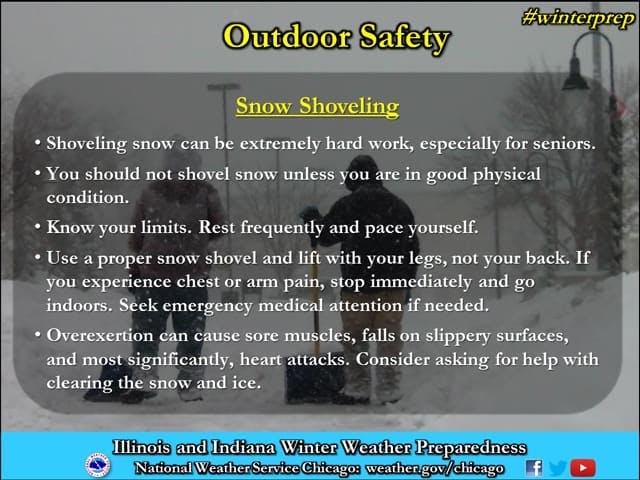
Of course there’s always the good old fashioned standby, the shovel. For
the calorie conscious, a 15 minute spell is considered moderate physical
activity, akin to brisk walking or dancing. This is bad news for people
whom moderate physical activity or stress can be dangerous, for
example-those with heart conditions. The greatest loss of life after
large snowstorms is related to the physical activity and strain placed
upon the hearts of people doing the shoveling. Shoveling, already a
source of higher blood pressure and heart rates, can be made even more
problematic if the weather is particularly cold, or you haven’t dressed
for the cold properly.
So what to do? If you have a history or heart related problems, don’t
tackle the snow head on, get help. Ask your physician if you should be
shoveling the snow, and take his advice.
Be careful with the shoveling. Use a smaller shovel to lift less snow
(and therefore less weight) with each scoop, and lift properly to
protect your back from injury.
Keep hydrated by drinking plenty of water before you begin, and avoid
nicotine and caffeine. These are stimulants which will increase your
heart rate and blood pressure and place extra stress on your heart.
Dress for the weather, using multiple layers to keep warm. You can
always take them off if you begin to overheat.
Think of shoveling as a workout, prepare by warming up appropriately-and
listen to your body! If something starts to hurt-stop shoveling
immediately!
And finally, be prepared for ice, and potential slipping. Keeping your
walkways clean means you and your loved ones can get to where you’re
going safely.
Enjoy the new year safely-one step at a time!
H1N1 - Why is H1N1 called H1N1?
November 2009
H1N1 Information
Influenza A has gone by a variety of types and names over the years,
the most current so-called “swine” flu being the H1N1 virus...but where
does the term H1N1 come from?
Each of the letters stands for an antigen (protein) on the virus itself,
which hooks into cells in your body. The H stands for hemagglutinin (of
which there are 16 basic shapes) and the N for neuraminidase (which has
9). The virus is identified by these hemagglutinin and neuraminidase
combinations. A variant of the 2009 H1N1 itself was first identified
around 1918.
For more information about H1N1 and Influenza, please visit
http://www.cdc.gov/h1n1flu/qa.htm. The schools within the boundaries
of the Norwood Park Fire Protection District can be accessed from our
Links section for up-to-date local information regarding schools and the
virus.
The Bulletin Article
What I Wish
People Knew About EMS, Firefighters, Dispatchers and Law Enforcement
|